
Criminal Case: The Conspiracy
Pretty SimpleAdventure
4.74.16K Reviews
- Version
- 2.45.1
- Installs
- 5.00M
- Age Rating
- Teen
Screenshots


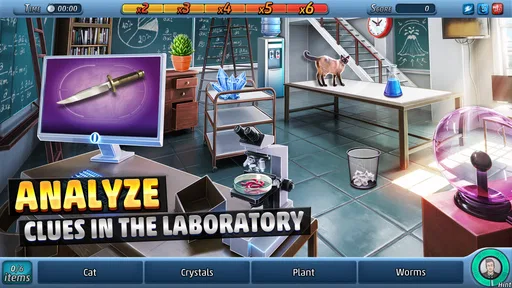
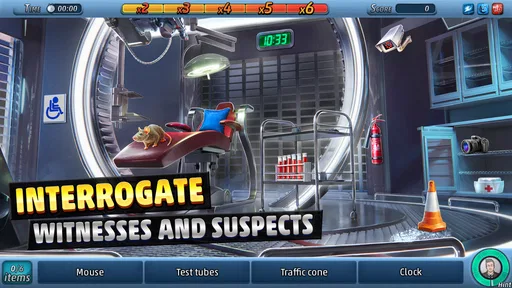
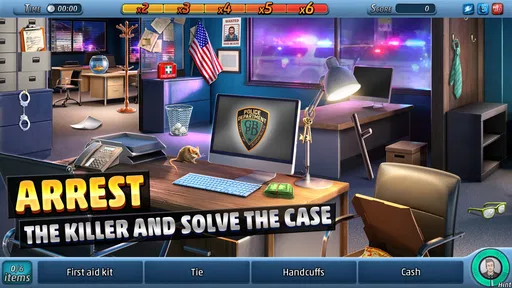
Our Review of Criminal Case: The Conspiracy
 Analysis by Appyee
I approached Criminal Case: The Conspiracy as a short-session mystery game rather than something I would play like a traditional action adventure. That distinction matters. Its appeal comes from investigating murder cases, examining scenes, noticing details, and gradually working through a conspiracy, not from fast reflexes or complex movement. I found it easiest to enjoy when I had a few quiet minutes and wanted a focused puzzle with a story attached.
Developed by Pretty Simple, this free adventure game has a Teen content rating and runs on Android devices using version 7.0 or later. It has built a substantial audience, with more than five million installs and an average rating of 4.7 from roughly eighty-three thousand ratings. Those figures suggest that its basic formula has connected with many players, although popularity does not remove the need to decide whether its pace and structure suit you.
The central question is simple: are you ready to solve murder cases? In practice, the experience is less about instantly identifying a culprit and more about patiently collecting clues, revisiting evidence, and allowing the investigation to unfold. I recommend it most to players who like hidden-object searches and episodic detective stories. If you want constant action, deep free exploration, or a completely self-directed investigation, this is probably not the right fit.
How the investigation feels in everyday play
I find the everyday appeal of the investigation comes from having one clear thing to do at a time, which makes it easy to fit a case into a spare moment. The useful question is not just whether I can spot the objects, but how each search, clue, and pause shapes the rhythm of returning to the game.
A deliberately measured pace
The game’s speed expectations are shaped by its investigation format. You generally look closely at a crime scene, search for relevant objects, and move through case-related tasks rather than rushing from one dramatic encounter to another. That makes the opening minutes feel approachable, but it also means the game can seem slow if you expect every tap to produce a major discovery.
I think that slower rhythm works particularly well on a phone. A realistic use case is playing during a coffee break: I can complete a small piece of an investigation without needing to remember a complicated control scheme or reserve a long uninterrupted session. The same design is useful before bed or while waiting for an appointment, provided the case has not reached a moment where I would rather continue immediately.
The hidden-object portions are the main test of attention. Instead of treating them as disposable filler, I found it better to scan the scene in a consistent pattern, starting at one corner and moving across the screen. That reduces the chance of repeatedly tapping the same obvious area while overlooking a small clue near the edge. It is a modest technique, but it makes the search feel more controlled and can reduce frustration.
There is also a trade-off between convenience and involvement. The game guides the investigation enough that I rarely felt completely lost, but that guidance can limit the satisfaction of solving everything independently. Players who enjoy being nudged toward the next step will appreciate the structure. Players who want to form theories from a large evidence board may find the process more linear than expected.
What happens when play becomes heavier
The more demanding moments are not about twitch performance. They come when a case asks me to repeat searches, process several clues, or stay engaged through multiple connected tasks. During those stretches, the game’s resource demands are felt less through controls and more through attention: I need to remember what I have already examined and avoid treating every object as equally important.
For that reason, I would not call it a game that rewards frantic play. A rushed approach can make a familiar scene feel harder because visual details begin to blend together. I get better results by pausing briefly, looking for unusual shapes or contextually suspicious objects, and only then tapping. This is one of the less obvious strengths of the format: it encourages observation, even though the individual actions are simple.
Longer sessions can expose the limits of the formula. Searching scenes repeatedly may feel satisfying when I am in the mood for a calm puzzle, but repetitive when I want the story to advance quickly. The game is strongest when used in portions rather than treated as an all-evening marathon. That is not a flaw for everyone, but it is an important expectation to set before installing it.
I also recommend keeping the phone’s battery and available storage in mind during heavy use, without assuming that every device will behave identically. A game with illustrated scenes and continuing case content can feel more comfortable on a modern phone than on an older, heavily loaded one. If the device already struggles with ordinary apps, I would avoid judging the game solely by its first launch and instead leave enough room for a stable session.
Reliability and recovering from interruptions
Reliability matters more in a case-based game than it might in a disposable arcade title. Losing progress in the middle of an investigation would be especially irritating because the value comes from following a chain of evidence. In my experience, I prefer to finish a small task before switching apps rather than abandoning the game at the exact point where a scene or clue is being processed.
That habit is useful for any mobile game, but it is particularly sensible here. Phone calls, notifications, low battery, and accidental app switching are ordinary interruptions. I would also avoid closing the game immediately after completing a meaningful action if I am concerned about recovery; giving the app a moment to settle is a simple way to reduce the risk of an unclear return point.
The game’s episodic structure helps recovery from a different kind of interruption: losing track of the broader plot. Because the investigation is divided into cases and smaller objectives, I can usually reorient myself by checking what the current task is rather than reconstructing an enormous open-world quest. That makes it friendlier for occasional players than a sprawling adventure that expects daily attention.
Still, the experience is not ideal for someone who wants complete control over saving and pacing. Its progression is built around the investigation flow, so I cannot simply turn every moment into a free-form deduction exercise. If my priority were robust offline play, extensive manual saves, or a story I could rearrange at will, I would look toward a premium detective adventure instead.
Device constraints and practical expectations
The minimum Android requirement is 7.0, which keeps the game accessible to a broad range of phones, but a minimum operating-system requirement should not be confused with a guarantee of identical comfort on every compatible device. Screen size, memory, background apps, and the general condition of the phone can all affect how pleasant a visually detailed search feels.
A larger display is useful because hidden-object scenes depend on small visual distinctions. On a compact phone, I sometimes need to look more carefully, and that can make a supposedly quick session take longer. Conversely, a tablet-sized screen may make scanning easier, though the game’s short-session design still feels more naturally suited to a phone in my hands.
I would close unnecessary apps before a longer investigation, especially on an older device. That is not a special trick for this title; it is simply good practice when a game needs to load scenes and keep a story sequence ready. If the phone becomes warm or the interface begins to feel less responsive, I would take a break rather than repeatedly tapping and assuming the game has ignored input.
The current version is 2.45.1, and the game remains free to download. Its in-app purchases range from $0.99 to $99.99 per item, so the word “free” should be understood as an entry point rather than a promise that every player will want to spend nothing. I would begin without buying anything and see whether the natural pace suits me. That gives a clearer sense of whether optional spending would improve convenience or merely shorten a progression rhythm I actually enjoy.
Where the design is genuinely useful
One of the game’s practical strengths is that it gives casual players a recognizable routine. I can open a case, search a scene, follow a clue, and stop without learning a complicated system first. That makes it a reasonable choice for someone who likes crime shows and wants an interactive version of that mood, but does not want a demanding role-playing game with inventories, statistics, and long tutorials.
A second strength is the way visual searching changes the pace of storytelling. The plot is not delivered only through passive reading; I have to participate by examining places connected to the crime. Even when the deduction is guided, that physical act of looking helps the case feel more personal than simply selecting dialogue options.
A third, less obvious benefit is its suitability for shared play without becoming a formal multiplayer game. I can hand the phone to a friend or family member and ask them to spot an object in a scene. That turns a quiet solo investigation into a small cooperative moment. It works best when both people enjoy the same level of guidance, because one player may want to search naturally while the other wants to tap through quickly.
There is also a useful distinction between clue recognition and story judgment. Finding an object does not always mean I have understood its significance immediately. I get more from the game when I treat each discovery as part of a larger sequence instead of trying to guess the killer from a single dramatic detail. That mindset makes the guided structure feel intentional rather than restrictive.
How it compares with other detective games
Compared with a traditional point-and-click adventure, this game is easier to enter but usually offers less freedom in how I approach a case. A classic adventure may let me combine items, revisit locations for new reasons, and reach solutions through experimentation. Criminal Case: The Conspiracy is more direct: it emphasizes searching and progressing through a designed sequence.
Compared with a pure hidden-object game, it gives the searches more narrative purpose. I am not only looking for unrelated objects to clear a board; the scenes are tied to murder investigations and a continuing conspiracy. That story connection is the main reason I would choose it over a collection of disconnected visual puzzles.
Compared with premium mystery games, the free entry point is attractive, but the pacing and purchase structure deserve more attention. A paid alternative may offer a more compact experience with fewer interruptions or a stronger sense of authorial control. On the other hand, it may not provide the same low-commitment opportunity to try several investigations before deciding whether the style is for me.
Players who prefer action adventures should also understand the difference. The category may be adventure, but this is not an action-heavy journey built around combat, platforming, or fast navigation. Its tension comes from the subject matter and the gradual assembly of evidence. That makes it suitable for thoughtful casual play, not for someone searching for adrenaline.
Who should install it, and who should skip it
I would recommend it to players who enjoy crime fiction, visual searches, guided mysteries, and mobile sessions that can be divided into manageable pieces. It is especially approachable for people who want an adventure game that explains its next step instead of leaving them with a huge map and several unrelated objectives.
I would be more cautious if you dislike repetition, prefer uninterrupted storytelling, or become annoyed when a game’s pace is slower than your own curiosity. The same search-based structure that makes it relaxing can feel mechanical after a long session. It is also not my first choice for players who want genuinely difficult deductions, extensive branching choices, or the feeling that every conclusion came entirely from their own reasoning.
The Teen rating is another reason to think about audience before sharing the game. Its murder-case theme is not the same as a light family puzzle, so I would not automatically hand it to a young child simply because the controls are easy. The subject matter and the player’s comfort with crime stories matter more than the simplicity of tapping through a scene.
My performance verdict
After weighing speed, heavier play, reliability, and device constraints, I see Criminal Case: The Conspiracy as a steady, low-pressure investigation game rather than a technically demanding showcase. Its best performance quality is practical: it fits naturally into short sessions, asks for attention without requiring fast reactions, and gives me a clear route back into the current case after a break.
Its limitations are equally clear. Repeated searches can test patience, a guided case may not satisfy serious deduction fans, and the free-to-play structure means I should pay attention to how optional purchases affect my preferred rhythm. I would also choose a stronger device and a larger screen when possible, not because every older phone will fail, but because visual searching is simply more comfortable when the display responds cleanly.
For me, the deciding question is whether the act of looking for evidence sounds enjoyable. If it does, the game offers an accessible way to spend a few minutes solving murder cases without committing to a complicated adventure system. If I want freedom, intensity, or a one-time premium mystery with tightly controlled pacing, I would choose something else.
Overall, I think Pretty Simple has made a game that understands its mobile audience: it is easy to start, recognizable in structure, and flexible enough for occasional play. I would install it for calm detective sessions, use a deliberate scanning method during crowded scenes, avoid judging it by action-game standards, and test the free experience before considering any purchase. Its real strength is dependable, guided mystery play that respects short pockets of time.
Verdict
Strengths of Criminal Case: The Conspiracy
- Engaging hidden-object investigations with varied crime scenes.
- Story-driven cases provide a clear sense of progression.
- Clues and evidence are easy to identify on mobile screens.
- Regular tasks and cases give the game lasting replay value.
- Free-to-play structure lets you try the main gameplay without paying.
Limitations of Criminal Case: The Conspiracy
- Energy limits can interrupt investigations at inconvenient moments.
- Some premium items and boosts may feel expensive over time.
- Repeated searches can become predictable during longer cases.
- Progress may depend heavily on waiting or watching optional ads.
- An internet connection is generally required for full functionality.
Other Releases by Pretty Simple
View All
Criminal Case
Adventure4.6

Criminal Case: Save the World!
Adventure4.7

Criminal Case: Pacific Bay
Adventure4.7

Criminal Case: Mysteries
Adventure4.6
Similar Picks in This Category
View All
Roblox
Roblox Corporation4.2

Pokémon GO
Niantic, Inc.3.5

Ninja warrior: legend of adven
TOH Games4.6

Ninja Arashi
Black Panther4.6

Eyes - The Horror Game
Fearless Games sp. j.4.5

Critical Action:Gun Strike Ops
FPS Shooter & Action Game4.3
Frequently Asked Questions
What is Criminal Case: The Conspiracy about?
Criminal Case: The Conspiracy is a hidden-object detective game in which you investigate murders, examine crime scenes, collect evidence, question suspects, and solve challenging cases. The story is presented through a series of investigations, with clues gradually revealing motives and connections. It combines searching scenes with light puzzle-solving and narrative choices, making it suitable for players who enjoy casual mystery games.
Is Criminal Case: The Conspiracy free to download and play?
The game can generally be downloaded for free on supported Android and iOS devices, but it includes optional in-app purchases. Progress may also be affected by energy or waiting systems, depending on the current version. You can play without spending money if you are patient, although purchases may help unlock energy, resources, or faster progression. Always check the store listing for the latest pricing details.
Does Criminal Case: The Conspiracy require an internet connection?
An internet connection may be needed for downloading game data, synchronizing progress, displaying advertisements, processing purchases, and accessing certain online features. Some previously loaded scenes might work temporarily offline, but offline availability is not guaranteed and the game may eventually require reconnection. For the most reliable experience, play while connected to a stable Wi-Fi or mobile data network.
Is Criminal Case: The Conspiracy appropriate for children?
The game is designed around crime investigations and includes murder cases, suspicious characters, references to violence, and darker mystery themes. Although the presentation is stylized rather than extremely graphic, younger children may still find some situations unsettling. Parents should review the age rating, in-app purchase settings, advertising options, and privacy information before allowing a child to download and play.
What devices are compatible with Criminal Case: The Conspiracy?
Compatibility depends on the operating system version, available storage, and the requirements listed on the official Google Play Store or Apple App Store page. Most relatively recent Android and iOS smartphones and tablets should run the game, but older devices may experience slower loading, crashes, or limited support. Before installing, check the current store listing and keep enough free space for updates and additional game data.
Play our best games!


